
Bean to Cup Coffee Machines: A Complete Guide for Businesses in Ireland
Bean to cup coffee machines are one of the most popular commercial coffee solutions for businesses across Ireland, offering a fully automated way to deliver high-quality coffee at scale. This guide explains how bean to cup machines work, how they compare to espresso and instant systems, and how to choose the right setup based on your workplace needs, usage, and coffee expectations.
Quick Comparison: Bean to Cup Coffee Machines
Bean to cup coffee machines are automated systems designed to deliver consistent, high-quality coffee in commercial environments across Ireland.
- Grind fresh beans and prepare each drink automatically
- Ideal for offices, hospitality and self-service environments
- Fresh milk = better taste, powdered milk = easier maintenance
- Bean to cup = convenience, espresso = manual skill, instant = speed over quality
- Suitable for businesses needing reliable, barista-style coffee at scale

What is a Bean to Cup Coffee Machine?
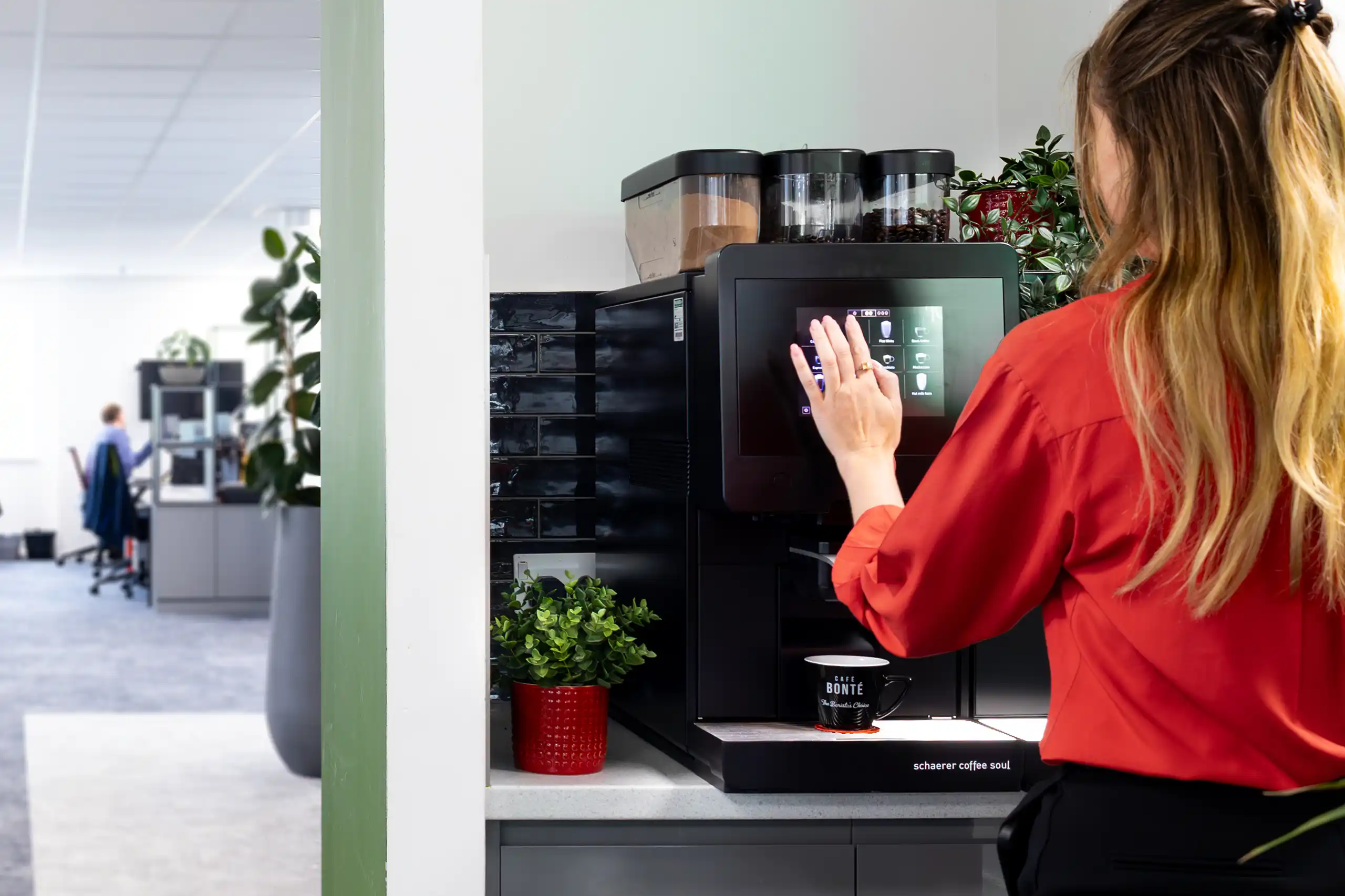
A bean to cup coffee machine handles the entire coffee-making process automatically, from grinding beans through to brewing espresso and preparing milk-based drinks. It’s commonly used in commercial settings where speed, consistency and ease of use are essential.
Put simply, they deliver barista-style coffee quickly and reliably, making them a popular choice for offices, hotels, and workplaces, particularly when using a bean to cup coffee machine with fresh milk for a more premium coffee experience.
How do Bean to Cup Coffee Machines Work?
Bean to cup machines automate the entire coffee-making process from bean to cup.
Each drink typically follows three steps:
- Fresh beans are ground for every cup
- Espresso is brewed under pressure
- Milk is automatically prepared, either using fresh milk or powdered milk systems
In commercial settings, this allows businesses to serve consistent drinks quickly, often in under a minute, without requiring trained staff.
Most machines include bean hoppers for coffee storage, integrated milk systems (fresh or powdered) and automated cleaning and rinse cycles.

What’s The Difference Between Fresh Milk & Powdered Milk Systems?
The main difference is in the taste, maintenance and day-to-day operation. The best option depends on how your workplace uses coffee day to day. Many businesses across Ireland choose fresh milk for quality, while others prioritise simplicity with powdered systems.
Fresh milk systems
Fresh milk systems are typically used where coffee quality is a priority. They produce a smoother texture and more natural taste, making them well-suited to hospitality settings and client-facing environments.

Powdered milk systems
Powdered milk systems are often chosen for convenience. They require less daily cleaning and are easier to manage in self-service or lower-maintenance environments.

Fresh milk systems
Fresh milk systems are typically used where coffee quality is a priority. They produce a smoother texture and more natural taste, making them well-suited to hospitality settings and client-facing environments.
Powdered milk systems
Powdered milk systems are often chosen for convenience. They require less daily cleaning and are easier to manage in self-service or lower-maintenance environments.
Bean to Cup vs Espresso Machines: What’s the difference?
The main difference is automation and ease of use.
Bean to cup machines handle grinding, brewing and milk preparation automatically, while traditional espresso machines require manual operation and trained baristas.
In simple terms:
Bean to cup = consistency and convenience
Espresso machine = control and skill
Bean to cup machines are typically better suited to:
- Offices with regular daily demand
- Self-service environments
- Businesses without dedicated baristas
Bean to Cup vs Instant Coffee Machines
The main difference is coffee quality and overall experience.
Bean to cup machines use fresh beans and brew each drink individually, while instant machines use pre-prepared ingredients for speed and simplicity.
In simple terms:
Bean to cup = higher quality and better taste
Instant = lower cost and minimal maintenance
For a more detailed comparison, you can explore a more detailed breakdown in our bean-to-cup or automatic machines guide.
Who should use a bean to cup coffee machine?
Offices in Ireland
Well-suited to busy workplaces, allowing employees to make quality coffee on demand without queues or training.
Hospitality environments
In hotels and similar settings, bean to cup coffee machines with fresh milk are often preferred to ensure drinks meet customer expectations for both taste and appearance.
Self-service environments
Spaces like gyms, automotive dealerships and reception areas benefit from straightforward, self-serve machines that require very little day-to-day management.
Why Invest in a Bean-to-Cup Coffee Machine?
Bean to cup machines are commonly used in commercial environments because they offer a reliable balance of quality, speed and convenience.
They enable businesses to:
- Provide freshly prepared coffee consistently throughout the day
- Minimise the need for trained staff
- Deliver a variety of drinks from a single system
Across workplaces in Ireland, they can also contribute to a better employee experience while helping create a more professional impression for customers and visitors.

What Are The Pros & Cons of Bean to Cup Coffee Machines?
Bean to cup machines offer a strong balance of convenience and quality, but there are practical considerations.
Pros:
- Freshly ground coffee for every drink
- Consistent results across high volumes
- Easy to use in busy environments
- Wide range of drink options
Cons:
- Require daily cleaning and regular maintenance
- Higher upfront cost than instant machines
- Fresh milk systems need more attention and hygiene management
How Much Does a Bean to Cup Coffee Machine Cost?
The cost of a bean-to-cup machine depends on usage, features and how it’s funded.
In simple terms:
- Purchase involves a higher upfront investment.
- Leasing spreads the cost and often includes service support.
Other cost considerations include:
- Cost per cup (coffee beans, milk, cleaning products)
- Maintenance and servicing
- Machine capacity and expected usage
In high-volume workplaces (200+ drinks per day), the cost per cup often becomes more efficient over time compared to external coffee purchases.

How To Choose a Bean to Cup Coffee Machine For Your Business
The best option depends on how your workplace uses coffee day to day.
Beverage output
Firstly, you will need to consider how many drinks per day you will average, depending on how many customers you get during busy periods.
If you’re looking for a low-volume machine, the Coffetek Vitro S1 is compact, affordable and produces up to 50 drinks per day. If however, you’re looking to produce in excess of 250 cups per day, then the Coffetek Vitro X3 would be more suitable.
Drink variety
If you need a wide menu, machines like the Schaerer Coffee Skye allow extensive customisation, including speciality drinks and milk options.
Milk system
- The Schaerer Coffee Soul 12 Fresh Milk is designed for premium fresh milk drinks.
- The Liquidline K2 Fresh Milk and Liquidline K2 Powdered Milk offer flexibility depending on maintenance preferences.
Cleaning and maintenance
Most machines include automatic cleaning cycles, but daily and weekly care is still required.
For businesses across Ireland, having access to reliable support, such as Liquidline’s Nationwide Service Network, is an important consideration.
Best Bean to Cup Coffee Machines For Businesses
The right machine depends on your environment and usage level.
Low-volume environments benefit from compact, easy-to-manage machines, mid-volume workplaces need a balance of capacity and drink variety, and high-volume environments require robust machines built for continuous use.
In practice, businesses across Ireland often choose based on:
- Daily drink output
- Preference for fresh or powdered milk
- Ease of cleaning and servicing

Are Bean-to-Cup Coffee Machines Worth It?
Yes, if your business values consistency, efficiency and quality coffee.
They are particularly effective when:
- Coffee is used daily by staff or customers
- You want to improve workplace experience
- You need a reliable, self-service solution
For lower-demand environments, simpler systems may be sufficient, but for most commercial settings, bean to cup machines offer a strong long-term solution.
A Solution Made For You
Bean to cup coffee machines with fresh milk offer a practical balance between quality and convenience, making them a reliable choice for businesses across Ireland.
The right setup depends on your environment, usage and expectations around coffee quality, particularly when deciding between milk systems.
If you’re exploring options, Liquidline can provide practical guidance based on your workplace needs.
Frequently Asked Questions
A bean to cup coffee machine with fresh milk offers better taste and texture, while powdered milk machines are easier to maintain.
Depending on the model, anywhere from around 50 to over 250 drinks per day.
Most commercial machines require:
- Daily rinsing, especially for milk systems
- Regular emptying of waste containers
- Weekly deep cleaning cycles
Proper maintenance helps ensure consistent drink quality and long-term reliability.
"*" indicates required fields
Frequently Asked Questions
A bean to cup coffee machine with fresh milk offers better taste and texture, while powdered milk machines are easier to maintain.
Depending on the model, anywhere from around 50 to over 250 drinks per day.
Most commercial machines require:
- Daily rinsing, especially for milk systems
- Regular emptying of waste containers
- Weekly deep cleaning cycles
Proper maintenance helps ensure consistent drink quality and long-term reliability.